
Straight, Solid Drywall Installation for New Rooms in Greater Fort Wayne
New walls and ceilings hung straight, fastened properly, and ready for finishing in additions, basements, and remodels throughout Hudson and Greater Fort Wayne, Indiana.
DRYWALL INSTALLATION
What Does Professional Drywall Installation Involve?
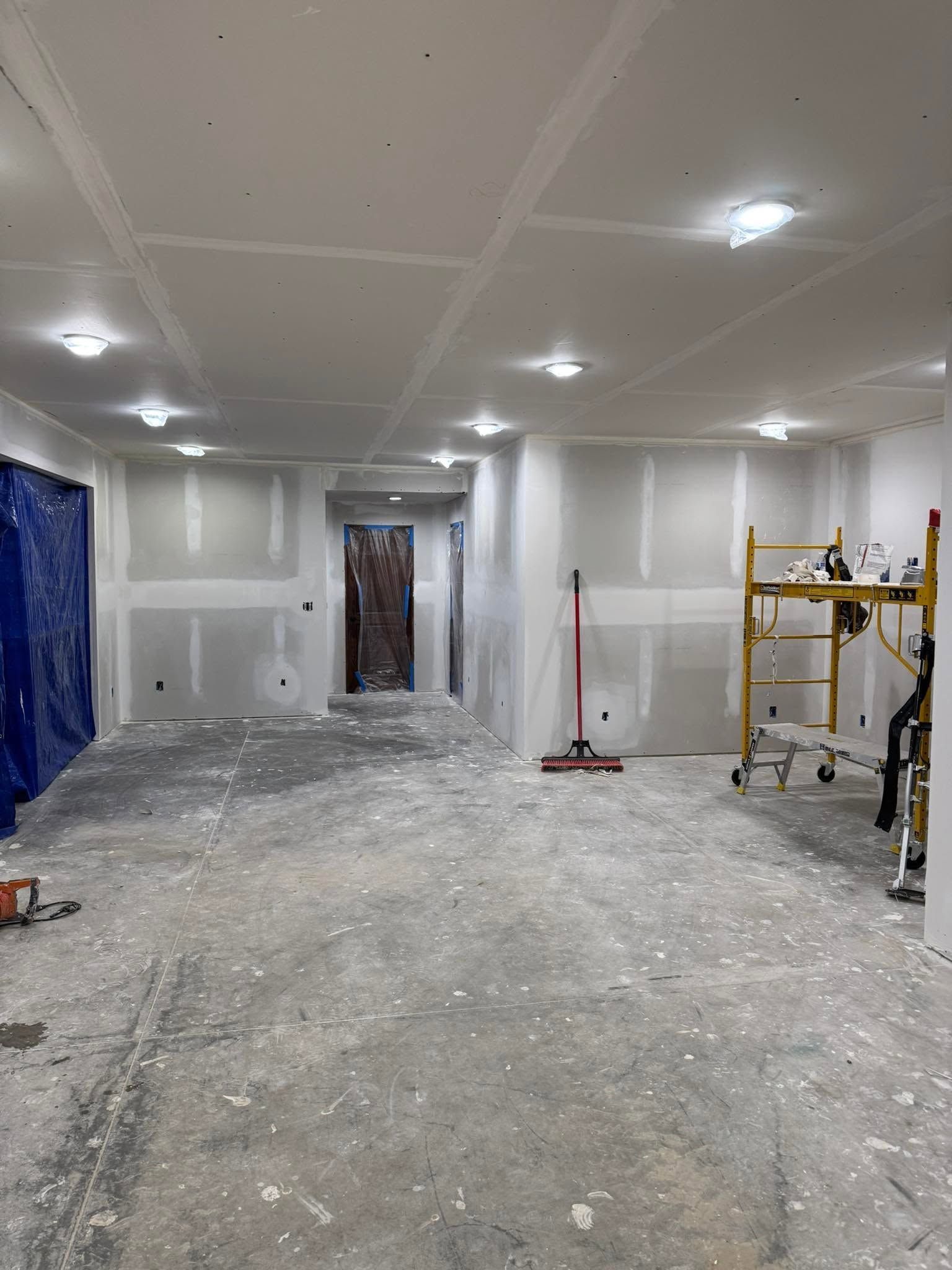
Professional drywall installation means measuring, cutting, and hanging new gypsum board on framed walls and ceilings so every sheet sits flat, seams land on framing, and fasteners are set at the right depth. At Perez Constructions, we install drywall in new additions, finished basements, remodeled rooms, garages, and commercial build-outs, then prepare the surface for taping.
We are based in Hudson, Indiana, and hang drywall for homeowners and businesses across Greater Fort Wayne and nearby Northeast Indiana towns. A good installation starts before the first sheet goes up. We check framing for straightness, confirm that electrical boxes, plumbing, and insulation are in place, and choose the right board for each space, such as moisture-resistant panels near bathrooms or fire-rated board where code calls for it. Careful layout reduces the number of seams and butt joints, which makes finishing easier and helps walls and ceilings look smooth and stay solid for years to come.
✓ Additions and newly framed rooms
✓ Basement walls and ceilings
✓ Ceilings hung with proper support
✓ Moisture-resistant board where needed
✓ Layout planned to reduce seams
✓ Ready for taping and finishing
NEW WALLS
Hudson & Fort Wayne, IN
WHERE WE INSTALL
New Walls and Ceilings That Start Out Straight and Solid
Drywall installation is the stage where a framed space turns into a real room. If sheets are hung out of plane, fastened poorly, or joined in the wrong places, no amount of finishing will fully hide it. We treat hanging as its own craft, paying attention to layout, fastener spacing, and how the board meets corners, windows, and doors. Whether you are adding a family room, finishing a basement, or building out a commercial suite, our installation work gives the finishing stage a flat, well-supported surface to work with. Here are the projects we handle most often.
Home Additions
New bedrooms, sunrooms, and family rooms hung with full sheets wherever possible, with seams planned around windows and doors so the new space blends with the rest of your home.
Basement Finishing
Walls and ceilings hung over framed basement spaces, with moisture-resistant board where it makes sense and careful work around ductwork, beams, and utility areas common in Indiana basements.
Ceiling Installation
Ceiling board hung first and fastened securely to joists or furring, so sheets stay flat and the joints at the wall line are tight before any wall panels go up.
Remodels and Reframed Walls
When a remodel moves or removes walls, we hang new drywall on the reframed areas and tie it cleanly into existing surfaces so the old and new sections line up.
Garages and Utility Rooms
Drywall for attached garages, workshops, and laundry areas, including fire-rated board where local code requires it between the garage and the living space of your home.
Commercial Build-Outs
New partitions, offices, and ceilings for business spaces, installed with tidy work zones and coordinated with other trades so the project keeps moving toward the finishing stage.
How Your Drywall Installation Goes From Bare Framing to Ready-to-Finish Walls
Hanging drywall well depends on what happens before and after the sheets go up. We follow the same organized steps on every installation so your framing, utilities, and layout are checked, the board is hung correctly, and the surface is ready for taping.
01
Project Consultation
We look at the framed space, talk about how the room will be used, and note any special needs such as moisture exposure, fire separation, or high ceilings.
02
Framing and Utility Check
Before hanging, we check studs and joists for straightness and confirm that wiring, plumbing, insulation, and any required inspections are done, so nothing gets closed in too early.
03
Layout and Materials
We plan sheet direction and seam locations, then select the right board type and thickness for walls, ceilings, wet areas, and fire-rated spaces in your project.
04
Hanging the Board
Ceilings go up first, then walls, with sheets fastened at proper spacing and depth, edges tight, and cutouts made cleanly around boxes, windows, and doors.
05
Corners and Inspection
We install corner bead, check every surface with a straightedge and light, and fix loose fasteners or gaps so the walls are ready for finishing.
06
Cleanup and Walkthrough
Scraps and dust are removed, the space is left tidy, and we walk through the room with you before moving on to taping and finishing.
5+ YEARS
How it works
Ready to Close In Your New Space in Greater Fort Wayne?
When you hire Perez Constructions for drywall installation, you work with a locally owned team that explains each step before it happens. We tell you what we see in your framing, point out anything that could affect the final look, and recommend board types based on the room, not on what is easiest for us. If an issue turns up, like a bowed stud or a missing electrical box, we flag it before the wall is closed. That attention to small details at the hanging stage saves time and frustration during finishing and painting.
New walls and ceilings are the backbone of any addition, basement, or remodel, and they deserve the same care as the finishes that go on top. From Hudson to Fort Wayne and the communities in between, we bring honest communication and careful workmanship to every drywall installation we take on. We will help you plan the layout, choose the right materials, and coordinate the work with the rest of your project so your new space comes together smoothly. To talk about your drywall installation, call us or fill out our contact form.
How Should You Prepare for New Drywall Installation in a Northeast Indiana Home?
Prepare by confirming that framing, wiring, plumbing and insulation are finished and inspected where required, then clear the rooms and plan for dust control. Drywall goes up last in the rough stage, so anything hidden behind it must be right first. That order saves rework in Greater Fort Wayne, Indiana homes.
New drywall is common in basement finishing, additions and gutted rooms. Choosing the right board for each location matters just as much as hanging it straight, especially with the humid summers and cold winters we see in Northeast Indiana.
Steps Before and During Installation
- Check the framing. Studs and joists should be straight and properly spaced so the board lies flat and seams stay tight.
- Finish the rough work. Electrical boxes, pipes, ducts and insulation need to be complete before the first sheet goes up.
- Choose board by room. Bathrooms, laundry areas and basements often call for moisture-resistant board, while garages near living space may need fire-rated panels.
- Plan the layout. Using larger sheets and staggering joints reduces seams and makes finishing smoother.
- Hang, fasten and inspect. We fasten each sheet correctly and check for gaps and popped fasteners before taping begins.
- Move on to finishing. Taping, mudding and sanding turn hung board into a wall that is ready for paint.
Comparing Common Drywall Options
- Standard board. The everyday choice for dry living areas, bedrooms and most walls.
- Moisture-resistant board. Better suited to bathrooms, laundry rooms and basement walls where humidity runs higher.
- Fire-rated board. A thicker panel used where building codes call for added fire resistance.
- Lightweight ceiling board. Easier to lift overhead and less likely to sag between ceiling joists.
Once your board is hung, our drywall finishing work and interior painting carry the room to completion. To plan your project with our team, call us or fill out our contact form.
Common questions
Frequently Asked Questions
Planning new walls or ceilings often raises questions about materials, timing, and what has to happen before drywall goes up. These answers cover the questions we hear most from homeowners and businesses getting ready for installation.
What has to be done before drywall can be installed?
Framing should be complete and straight, and all wiring, plumbing, ductwork, and insulation need to be in place. Any required inspections of that work should be finished before walls are closed. We check these items during our first visit and let you know if anything needs attention, because fixing a problem after the board is hung costs more time and effort.
Which type of drywall is right for my project?
It depends on the room. Standard board works for most walls and ceilings, moisture-resistant board makes sense near bathrooms and in some basement areas, and fire-rated board is used where code requires separation, such as between an attached garage and living space. Thicker or sag-resistant board may be used on ceilings. We recommend the right product for each area.
How long does drywall installation take?
Timing depends on the size of the space, ceiling heights, the number of corners and window or door cutouts, and whether other trades need to finish first. A single room moves faster than a full basement or addition. After we see the project, we give you a realistic schedule for hanging and explain how it fits with taping, finishing, and painting.
Can you install drywall in a basement?
Yes, basements are one of the most common places we hang drywall. Northeast Indiana basements can see moisture and humidity, so we look for signs of water problems first and recommend addressing them before walls are closed. We often use moisture-resistant board in lower areas and plan carefully around beams, ducts, and utility spaces.
How much does drywall installation cost?
Cost depends on square footage, ceiling height, board type, the complexity of the layout, and whether finishing is included. Because every space is different, we do not give prices over a quick description. We visit, measure, and talk through your plans, then provide a clear written estimate that shows exactly what is included in the work.
Do you also tape and finish the drywall you install?
Yes. Installation is one stage, and we can carry the project through taping, mudding, sanding, and priming with our drywall finishing service so the walls are ready for paint. Handling both stages keeps the work consistent. To schedule a visit and talk through your project, reach out through our contact form.