

Drywall Repair That Blends In Across Greater Fort Wayne
Holes, cracks, nail pops, and water-damaged drywall patched and blended so the fix is hard to spot, for homes and businesses across Hudson and Greater Fort Wayne, Indiana.
DRYWALL REPAIR
What Kinds of Drywall Damage Can Be Repaired?
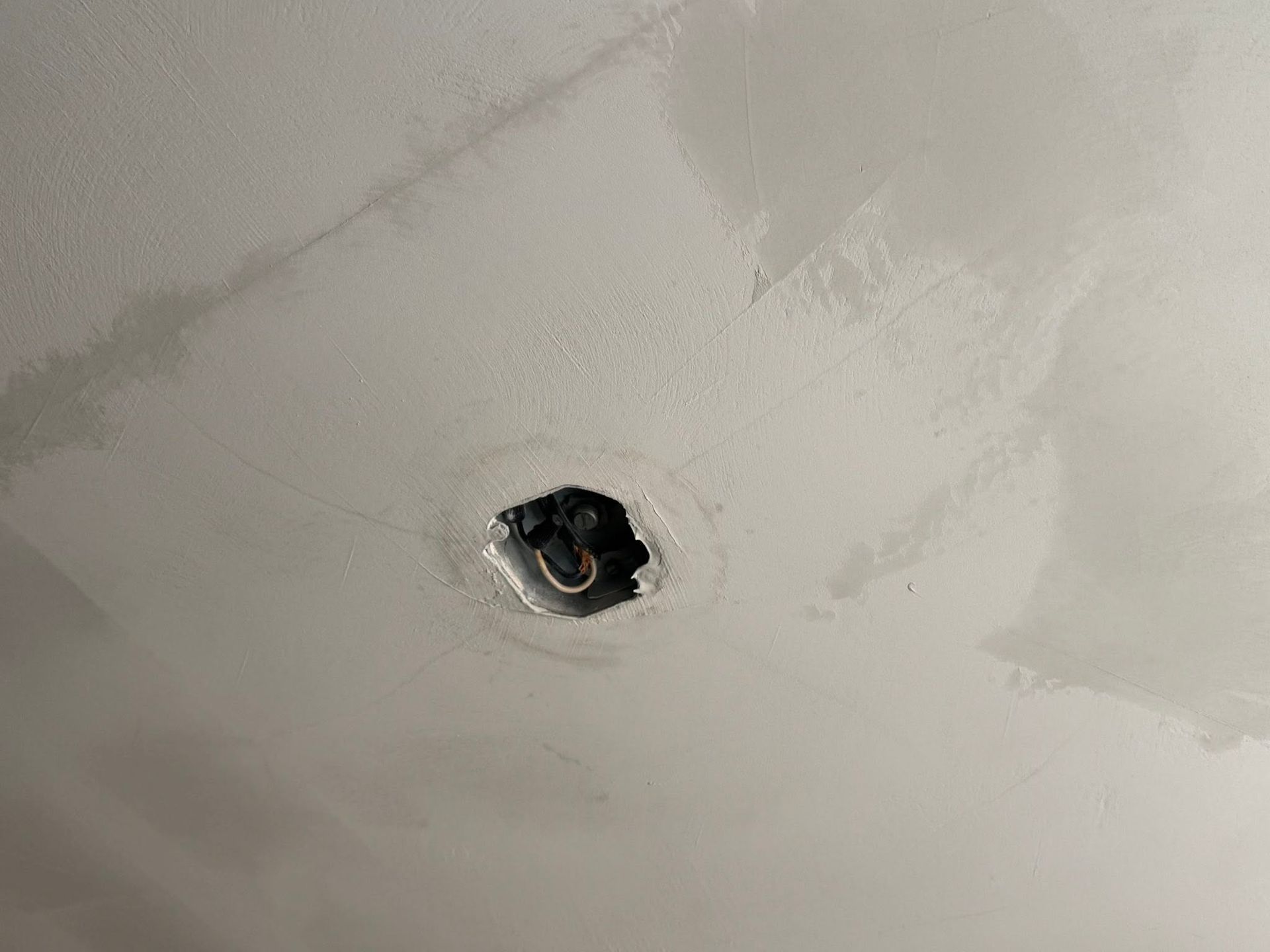
Most drywall damage can be repaired without replacing whole walls. Perez Constructions fixes doorknob holes, larger punctures, stress cracks, popped nails and screws, loose tape, dented corners, and sections damaged by leaks. We cut out what is damaged, patch with new material, then tape, mud, sand, and texture to blend the repair into the surrounding wall.
We are a locally owned team in Hudson, Indiana, repairing drywall for homeowners, landlords, and businesses throughout Greater Fort Wayne and nearby communities. Small repairs often reveal bigger causes, so we look at why the damage happened. A crack above a door may come from seasonal movement during Indiana freeze-thaw cycles. A stain on the ceiling usually means water, and we will not cover it until the source is fixed and the area is dry. Our goal is a repair you cannot pick out once the wall is painted, and an honest explanation of what caused the problem.
✓ Holes from doorknobs and impacts
✓ Stress cracks and loose tape
✓ Nail pops and screw pops
✓ Water-damaged walls and ceilings
✓ Dented and cracked corner bead
✓ Patches blended to match texture
DETAIL FOCUSED
Hudson & Fort Wayne, IN
DAMAGE WE FIX
Repairs That Fix the Damage and the Reason Behind It
A patch that shows through the paint, or a crack that comes back next winter, is not really a repair. We approach drywall repair by sizing up the damage, understanding the cause, and choosing the right method for the size and location of the problem. Small dings get filled and feathered, while larger holes get a properly backed patch. Water damage gets cut out and replaced once the area is dry. Every repair is finished to match the wall around it, including texture, so the final paint coat looks even from every angle in the room.
Holes and Punctures
From doorknob dents to fist-sized holes and larger gaps left by old fixtures, we install backed patches, then tape and feather the edges so the repair stays solid and flat.
Cracks and Loose Tape
Cracks at door corners, window corners, and ceiling joints are cut back, re-taped, and finished properly, which holds up far better than smearing filler over the line.
Nail and Screw Pops
Fasteners that push through the surface are reset or replaced with properly placed screws, then covered and blended so the small round bumps stop showing through your paint.
Water Damage Repair
Stained, soft, or sagging drywall from roof leaks, plumbing leaks, or basement moisture is cut out and replaced after the source is fixed and the framing is dry.
Corner Bead Repair
Dented, cracked, or loose metal and vinyl corner bead is removed and replaced, then finished so outside corners look straight and hold up to everyday bumps again.
Texture Blending
After patching, we match the existing finish, whether smooth, orange peel, or knockdown, so the repaired area reads as part of the wall rather than a separate spot.
How Your Drywall Repair Goes From Visible Damage to Invisible Patch
Repair work goes smoothly when the cause is understood and each step is done in order. Here is how we take a damaged wall or ceiling from the first look to a patch that blends in and is ready for paint.
01
Damage Assessment
We look at every damaged area, check for signs of moisture or movement, and explain what likely caused the cracks, holes, or popped fasteners you are seeing.
02
Repair Plan
You get a clear explanation of which areas need simple patching, which need sections replaced, and whether anything such as a leak should be fixed first.
03
Protection and Cutout
We cover floors and furniture, contain dust, then cut out damaged material back to sound drywall and add backing where a patch needs solid support.
04
Patch and Tape
New drywall is fitted into the gap, fastened, and taped, while cracks and pops are reset and reinforced so the repair does not return with seasonal movement.
05
Mud, Sand, and Texture
Several thin coats of compound are feathered wide, sanded smooth, and textured where needed so the patch sits flush and matches the surrounding wall surface.
06
Final Check
We inspect the repair in angled light, prime it for paint, clean up dust and debris, and walk you through what was fixed before we leave.
LOCALLY OWNED
How it works
Ready to Fix Damaged Drywall in Greater Fort Wayne?
Drywall repairs are often small jobs, and we treat them with the same care as a full remodel. When you reach out to Perez Constructions, you deal with a local team that shows up when we say we will, explains what we find, and does not stretch a simple repair into a bigger project. If we spot something that needs attention, such as an active leak or recurring cracking, we explain it plainly so you can decide what to do. We protect your home, keep dust contained, and leave the room clean.
Holes, cracks, and water stains tend to bother you every time you walk past them, and they usually get worse with time. A proper repair restores the wall, removes the eyesore, and gives you a clean surface for fresh paint. Whether you are getting a house ready to sell in Fort Wayne, fixing damage after a leak, or tidying up a rental between tenants, we bring honest advice and careful patchwork to every job. To schedule a look at your drywall damage, call us or fill out our contact form.
When Should You Repair Drywall Instead of Replacing It?
Repair makes sense when damage is limited to holes, cracks, dents, popped fasteners or small water stains on otherwise solid board. Replacement is the better call when drywall is soaked, crumbling, moldy or sagging. Finding and fixing the cause first matters, or the same damage returns to your Greater Fort Wayne, Indiana home.
Most drywall problems in Northeast Indiana homes come from everyday bumps, settling, or moisture from leaks and humid seasons. The size of the patch and the finish around it decide how invisible the repair will be once paint goes back on.
How a Drywall Repair Comes Together
- Find the cause. We look for leaks, settling or loose framing so the repair is not covering an ongoing problem.
- Cut back damaged material. Soft, stained or broken board is removed until we reach solid drywall.
- Patch and secure. New board or a patch is fastened in place and backed where needed so it stays flat.
- Tape and feather. Joint compound is applied in thin coats and feathered wide so the edges disappear.
- Match texture and prime. We blend the surface to the surrounding wall and prime it so paint absorbs evenly.
Signs It Is Time to Call for Drywall Repair
- Cracks above doors and windows. These often appear as a house settles and can widen over the seasons.
- Nail or screw pops. Small round bumps show where fasteners have pushed out through the surface.
- Water stains or bubbling. Discoloration on ceilings or walls usually means moisture is reaching the board.
- Holes from doorknobs or moves. Dents and punctures are common in busy hallways and kids rooms.
- Sagging ceiling panels. Board that droops between joists should be checked soon, not later.
- Old patches that show. Visible outlines under light usually mean the patch was never feathered or primed properly.
After a repair, many homeowners refresh the whole wall with interior painting, and larger moisture damage may fit better under home restoration and repairs. To have our team look at the damage, call us or fill out our contact form.
Common questions
Frequently Asked Questions
Drywall damage comes in many forms, and homeowners usually want to know whether it can be fixed, how long it takes, and what causes it. These answers cover the questions we hear most about drywall repair.
Can you repair a hole in drywall without replacing the whole wall?
Yes. Most holes, even fairly large ones, can be fixed by cutting the damaged section into a clean shape, adding backing, fitting a new piece of drywall, and taping and finishing it. Only widespread damage, such as a wall soaked by a long-running leak, usually calls for replacing larger sections. We will tell you honestly which approach makes sense.
Why do nail pops keep showing up on my walls?
Nail pops usually happen when framing lumber shrinks or shifts, pushing fasteners out from the surface. Seasonal humidity swings in Northeast Indiana make this common, especially in newer homes. Simply covering the bump rarely lasts. We drive a new screw nearby to secure the board, reset or remove the old fastener, and finish the spot so it blends in.
Is water-damaged drywall always replaced?
Not always, but often. Drywall that is stained yet firm and fully dry can sometimes be sealed and repainted. Drywall that is soft, crumbling, sagging, or shows signs of mold should be cut out and replaced. Either way, the source of the water needs to be fixed first. We check the area and explain what we recommend and why.
Will I be able to see where the drywall was patched?
Our goal is a repair you cannot pick out once the wall is painted. We feather compound wide past the patch, sand it flush, and match the existing texture, whether smooth or textured. Painting the full wall, rather than dabbing paint on the patch, gives the most even result, and we will let you know if that is needed.
How much does drywall repair cost?
The cost depends on the number of damaged areas, their size, whether texture matching is needed, and whether water damage requires larger sections to be replaced. Because each repair is different, we do not quote prices without seeing the damage. We come out, look at every area, and provide a clear written estimate before any work starts.
Why do cracks keep coming back above my doors and windows?
The corners of door and window frames are stress points where a house naturally moves with temperature and humidity changes. Cracks that were only filled, not re-taped, tend to return. We cut back the old crack, embed new tape, and finish it properly, which holds up much better. To have us look at recurring cracks, reach out through our contact form.